
Autoimmune Type 1 Diabetes (T1D): The Role of Beta-Cell Function and C-Peptide Assessment
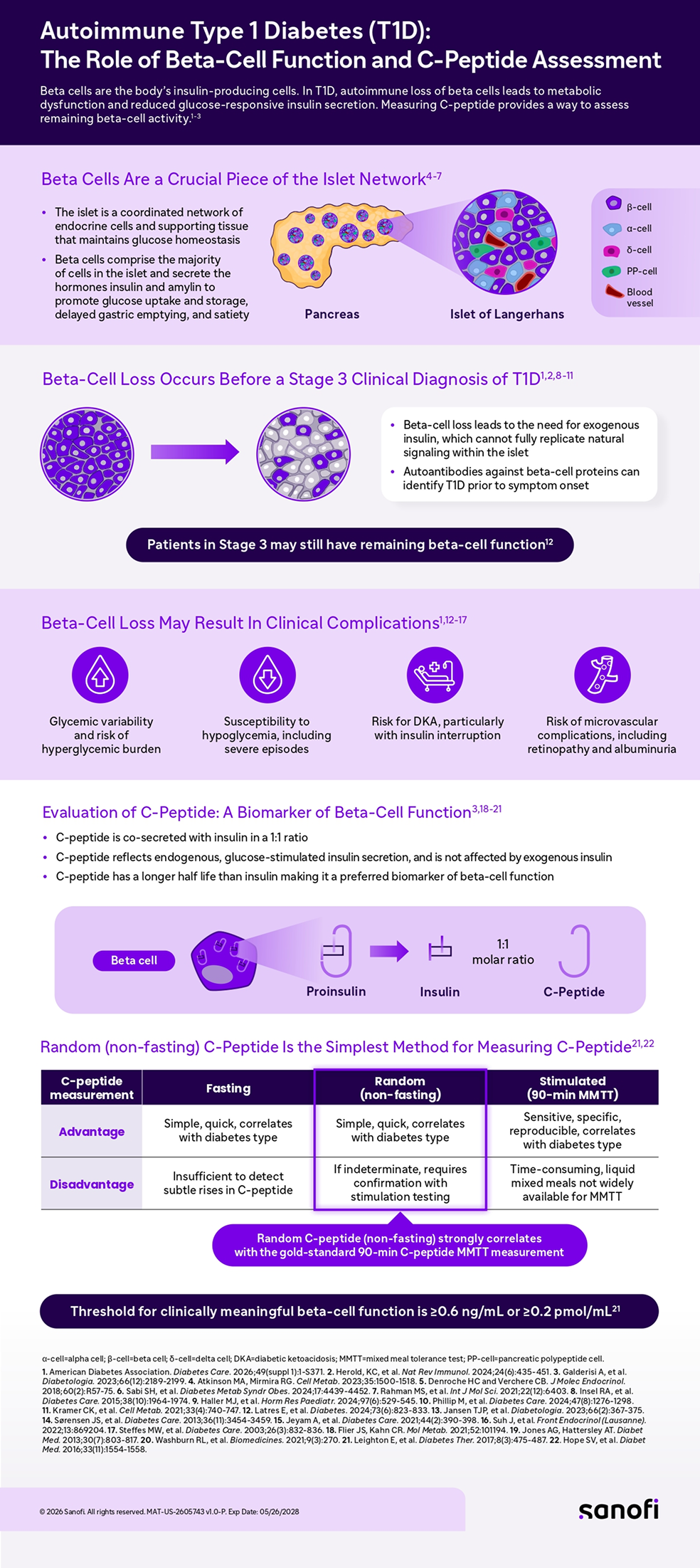
An examination of the role of beta cells within the pancreatic islet network and the clinical implications of progressive beta cell loss in autoimmune type 1 diabetes (T1D). Autoimmune destruction of beta cells preceding Stage 3 clinical diagnosis is described, alongside its potential consequences including glycemic variability, susceptibility to hypoglycemia, risk of diabetic ketoacidosis (DKA), and microvascular complications including retinopathy and albuminuria. C-peptide as a biomarker of residual beta cell function is also addressed, co-secreted with insulin in a 1 to 1 molar ratio and unaffected by exogenous insulin, with a comparison of three measurement approaches: fasting, random (non-fasting), and stimulated (90-minute MMTT). A clinically meaningful threshold of at least 0.6 ng per mL (at least 0.2 pmol per mL) for random C-peptide is referenced.
MAT-US-2605743 v1.0-P. Exp Date: 05/26/2028